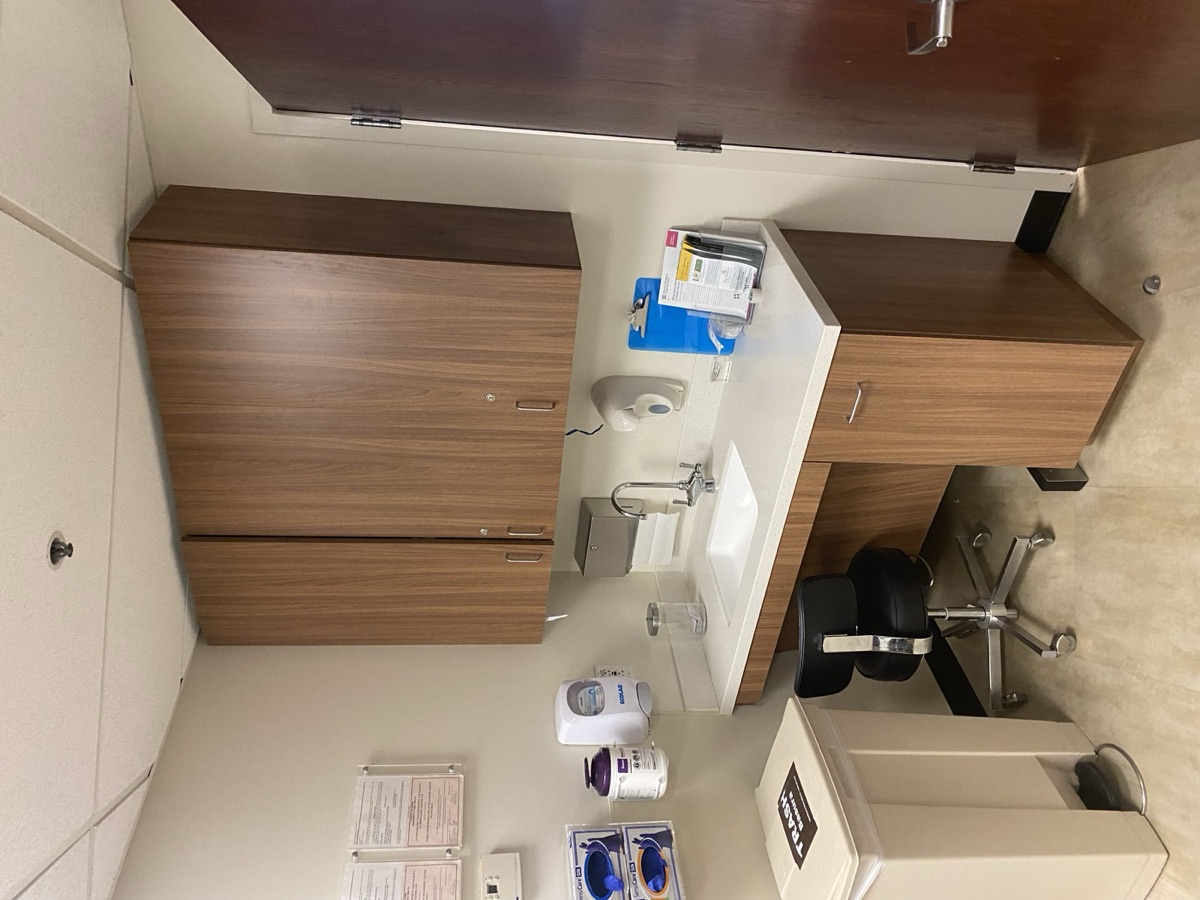


Facility directors comparing a healthcare renovation quote against their last office tenant improvement often have the same reaction: why is this so much more per square foot? The answer is structural, not markup. Healthcare interior work carries real cost drivers that standard commercial work does not, and understanding them is how you budget accurately and evaluate bids intelligently.
1. Infection control containment
Rigid barrier walls, anterooms, HEPA negative-air machines running around the clock, daily monitoring and logs: Class III and IV containment is a construction project before the construction project. It also slows production: every worker, tool, and cart moves through controlled entry points for the life of the job.
2. After-hours and phased labor
Occupied facilities push disruptive work into nights and weekends, which carries premium labor rates and shorter effective shifts. Phasing a floor into three stages so the department keeps operating means three mobilizations, three sets of temporary protection, three punch cycles.
3. Regulatory review and inspection
Projects under HCAI jurisdiction carry plan review cycles, a continuously present Inspector of Record, and documentation discipline that adds cost directly and indirectly through schedule. It is the price of building safely in the most consequential building stock in California, but it must be in the budget from day one.
4. What's above the ceiling
Decades of accumulated infrastructure (med-gas lines, data, pneumatic tube systems, abandoned conduit nobody labeled) live above healthcare ceilings. Renovation means working around all of it without interrupting any of it. Pre-construction investigation shrinks this risk; it never eliminates it, which is why honest healthcare budgets carry real contingency.
5. MEP density
A patient care space carries mechanical, electrical, and plumbing systems at a density office space never approaches: medical gas, isolation-capable HVAC, emergency power branches, nurse call, specialized lighting. MEP routinely dominates the trade budget on healthcare interiors.
6. Specialty materials and lead times
Ligature-resistant fixtures, lead-lined assemblies, hospital-grade door hardware, seamless flooring systems rated for clinical cleaning: healthcare products cost more and arrive slower. Long-lead procurement has to start at contract, not at the phase that needs the product.
7. General conditions on a stretched schedule
Supervision, temporary protection, negative-air rental, and site management run for every week the project exists. Since containment and phasing extend duration, they quietly extend general conditions too. When comparing bids, look hard at whether each contractor's schedule assumptions are realistic; the cheapest bid with a fantasy schedule is the most expensive bid on the project.
How to keep all seven honest
- Invest in pre-construction investigation before locking the budget.
- Require containment, after-hours premiums, and compliance costs as explicit line items; vagueness there becomes change orders later.
- Pressure-test the phasing plan against how your facility actually operates.
- Weight contractor healthcare experience heavily; tuition for a contractor learning healthcare on your project is the most expensive line item never written down.
Want a baseline phasing and compliance roadmap for your project in about a minute? Use our free planning tools, or send us your scope and we will price it against real site conditions.