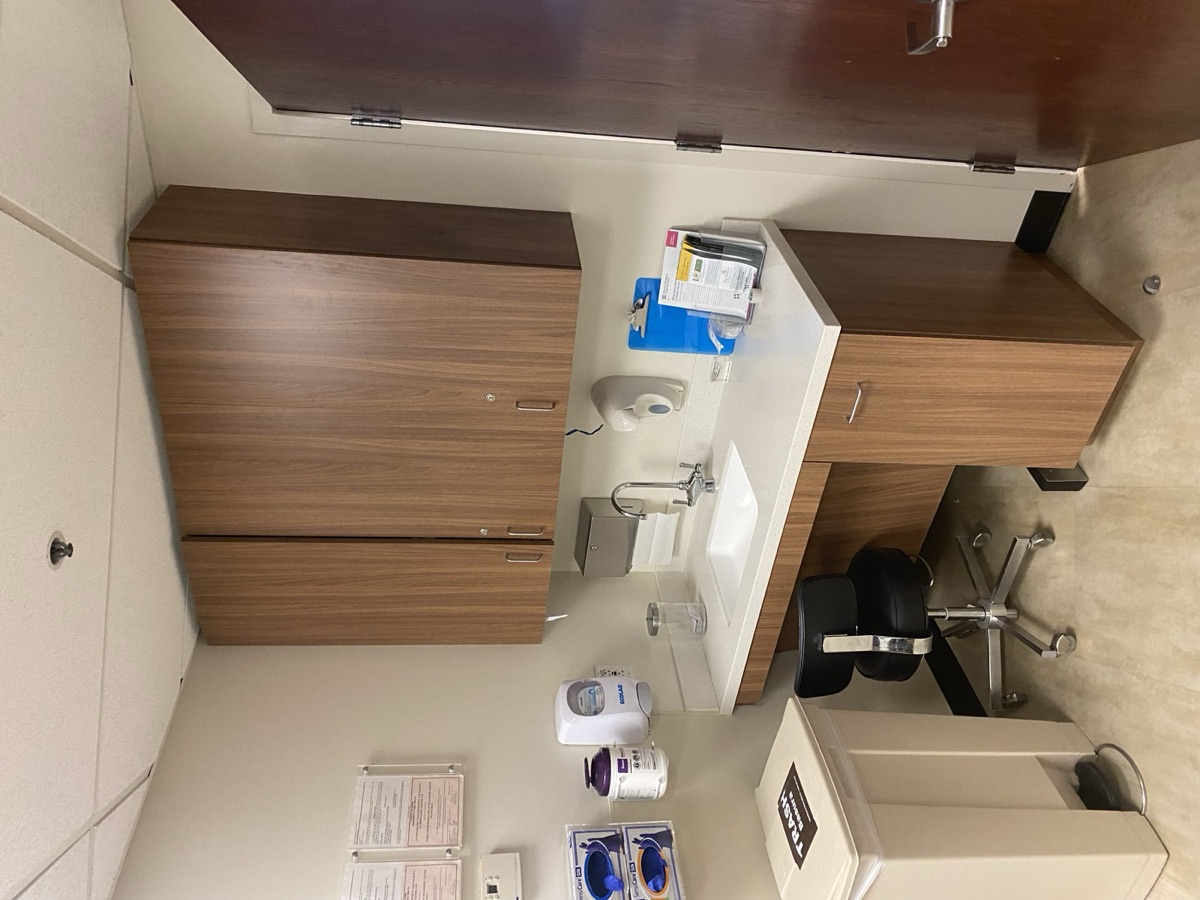


Short answer. Under the current ASHE ICRA 2.0 matrix, constructing an anteroom is an explicit requirement at Class V. Under the legacy four-class matrix it was required at Class IV. Many facilities still require one at Class IV by policy, so the facility's ICRA permit, not the matrix alone, settles it for your project.
Last reviewed October 21, 2026, against the ASHE ICRA 2.0 Matrix of Precautions (2022) and the legacy ICRA Matrix of Precautions (form updated 2009). Part of our guide to ICRA levels.
An anteroom costs floor area, time and money, and in an occupied hospital the floor area is usually the scarce one. It is also one of the places where the old and new ICRA matrices disagree, which is why it is worth settling before the containment plan is drawn. The answer depends on which matrix the facility uses, which class the work lands in, and what the facility's own policy adds.
What the two matrices say
| Legacy matrix (four classes) | ASHE ICRA 2.0 (five classes) | |
|---|---|---|
| Anteroom required | Class IV | Class V |
| What it says | "Construct anteroom and require all personnel to pass through this room so they can be vacuumed using a HEPA vacuum cleaner before leaving work site," or wear cloth or paper coveralls removed each time they leave | "Construct anteroom large enough for equipment staging, cart cleaning, workers," adjacent to the entrance of the construction work area |
| Clothing | HEPA vacuuming in the anteroom, or coveralls | Disposable coveralls at all times during Class V work, removed before leaving the anteroom |
| Airflow | Negative air within the work site | Negative airflow cascading from the entry point, to the anteroom, into the work area |
What about Class IV under ICRA 2.0?
This is the source of most of the confusion. ICRA 2.0's Class IV list does not include an item to construct an anteroom; that item appears only under Class V. But two Class IV items mention one: negative airflow must be maintained "from the entry point to the anteroom and into the construction area," and shoe covers must be changed "prior to exiting the anteroom." One reasonable reading is that Class IV assumes a controlled entry exists without requiring a built anteroom, and a facility's policy can, and often does, require one.
In practice, plan for one at Class IV when any of these is true:
- The facility's ICRA policy or permit form requires it, which is common where the form is still based on the legacy matrix.
- Workers, carts or materials pass from the work area straight into an occupied clinical corridor.
- The work will run for many shifts and the entry will see constant traffic.
- The infection preventionist asks for it after reviewing the surrounding areas in Step 4 of the assessment.
Which classes land on Class V?
Under ICRA 2.0, Class V, and with it the anteroom, applies to:
- Type D work (major demolition and construction) in a High risk area: patient care rooms, acute care units, the emergency department, diagnostic imaging, the laboratory.
- Type C or Type D work in a Highest risk area: ICU and transplant units, oncology, OR theaters, procedural suites, the clean side of sterile processing, isolation units.
- Any work in a High or Highest risk area where sewage, mold, asbestos, gray water or black water is present.
Remember that Type C includes any activity that cannot be completed in a single work shift, so a short-scope job that runs long in a Highest risk area can reach Class V on duration alone.
What a compliant anteroom has to do
- Sit at the entrance. ICRA 2.0 requires it adjacent to the entrance of the construction work area, so every person and cart passes through it.
- Fit the work, not just the worker. It has to be large enough for equipment staging, cart cleaning and workers. An anteroom sized for one person forces carts to be cleaned in the corridor or not at all.
- Be part of the barrier. Anteroom barriers are sealed like the main containment, with penetrations through floors and ceilings sealed using approved materials and firestop where the barrier type calls for it.
- Hold the airflow cascade. Air moves from the occupied side, into the anteroom, into the work area, never the reverse. That is the purpose of the room.
- Be where people change. Disposable coveralls come off and shoe covers are changed before leaving the anteroom, so the anteroom needs space and a place to contain used PPE.
Fitting one into a corridor that stays open
In an occupied hospital, most anterooms go into corridors that cannot close: they carry patients, staff and supplies, and they are part of the building's means of egress. That turns a containment detail into a phasing question.
- Protect egress first. The anteroom cannot reduce the corridor below what the facility's life safety team will accept, and any change to exits or compartments is handled by the hospital's interim life safety process before the barrier goes up.
- Plan the door swings and cart paths together. A door that swings into a narrowed corridor, or a cart that cannot turn inside the anteroom, defeats the room.
- Move the entry with the work. On phased corridor or unit work, decide early where the anteroom sits for each phase, because relocating it is a re-sealing and re-verification exercise every time.
- Count it in the schedule. Building, verifying and later removing an anteroom are tasks with their own durations, and the barrier cannot come down until the area has been cleaned and inspected.
Who decides
Who decides. The facility's infection preventionist assigns the class and issues the ICRA permit; the permit says whether an anteroom is required. Changes to corridors, exits and smoke compartments go through the facility's life safety team. The contractor designs, builds, maintains and documents the anteroom to that permit.
Check your class first
Whether you need an anteroom starts with the class. Our free ICRA 2.0 Level Assessor returns the class, the permit requirement and a checklist in about a minute. For the full picture of how the classes changed, see ICRA 2.0 vs. the original ICRA matrix. If you have a phasing plan and want a containment layout reviewed, send it to us.