
Short answer. ICRA 2.0, published by ASHE in 2022, replaces the four-class ICRA matrix with five classes, I to V. It ends the split "III/IV" cells, moves patient care rooms into the High risk group, bars Class II from construction, and adds Class V, with an anteroom and disposable coveralls, for the riskiest combinations.
Last reviewed October 21, 2026, against the ASHE ICRA 2.0 Matrix of Precautions for Construction, Renovation and Operations (2022) and the legacy Infection Control Risk Assessment Matrix of Precautions for Construction and Renovation (form updated 2009). This article is part of our guide to ICRA levels.
The original ICRA matrix has been the backbone of construction infection control for two decades, and it is still printed on a lot of hospital permit forms, contractor specifications and training slides. When a facility's paperwork says Class IV and the current guidance says Class V, someone has to reconcile the two before the barrier goes up. This crosswalk is meant to make that conversation short.
What is ICRA 2.0?
ICRA 2.0 is the American Society for Health Care Engineering's revised Matrix of Precautions for Construction, Renovation and Operations, released in 2022 as part of its ICRA 2.0 toolkit. It keeps the familiar structure, activity type crossed with patient risk group, but rewrites almost every part of it: the activity definitions, the risk groups, the class table, and the precautions each class requires.
The crosswalk: legacy class vs. ICRA 2.0 class
Each cell reads legacy → ICRA 2.0. Cells in bold changed.
| Patient risk group | Type A | Type B | Type C | Type D |
|---|---|---|---|---|
| Low | I → I | II → II | II → II | III/IV → III* |
| Medium | I → I | II → II | III → III* | IV → IV |
| High | I → I | II → III | III/IV → IV | IV → V |
| Highest | II → III | III/IV → IV | III/IV → V | IV → V |
Read the table with one caution: the rows did not keep the same members. The same physical room can sit in a different risk group under ICRA 2.0 (see below), so the class can change even where a cell did not.
Five changes that matter on a project
1. There is a Class V, and the split cells are gone
The legacy matrix left four cells at "III/IV", leaving the infection preventionist to choose. ICRA 2.0 resolves every one of them and adds a fifth class above Class IV. Class V applies to Type D work in High risk areas and to Type C and D work in Highest risk areas.
2. Class II is no longer a construction class
In the legacy matrix, Class II was a working construction tier: mist surfaces while cutting, seal unused doors, block air vents, place a dust mat, isolate HVAC. ICRA 2.0 redefines it as limited-dust facilities and engineering work under standing precautions approved by the organization, and states that it must never be used for construction or renovation activities. Two of the cells that used to read Class II (Type B in High risk, Type A in Highest) now read Class III.
3. The patient risk groups were rebuilt
| Group | Legacy matrix (examples) | ICRA 2.0 (examples) |
|---|---|---|
| Low | Office areas | Non-patient care areas off clinical units: public hallways, offices, break rooms, bathrooms, mechanical rooms, EVS closets |
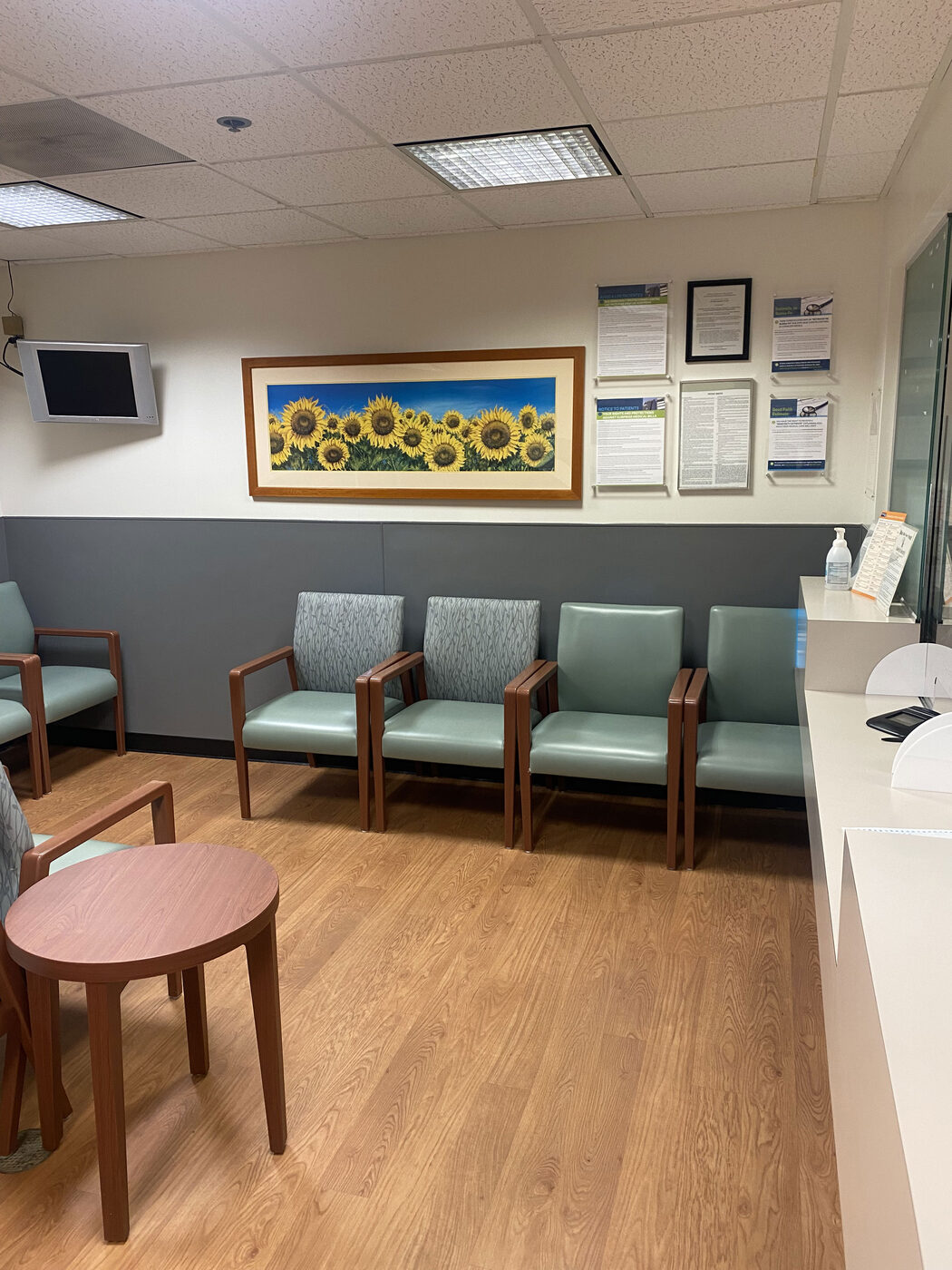
| Medium | Cardiology, echocardiography, endoscopy, nuclear medicine, physical therapy, radiology/MRI, respiratory therapy | Patient care support areas: waiting areas, clinical engineering, materials management, sterile processing dirty side, kitchen and cafeteria |
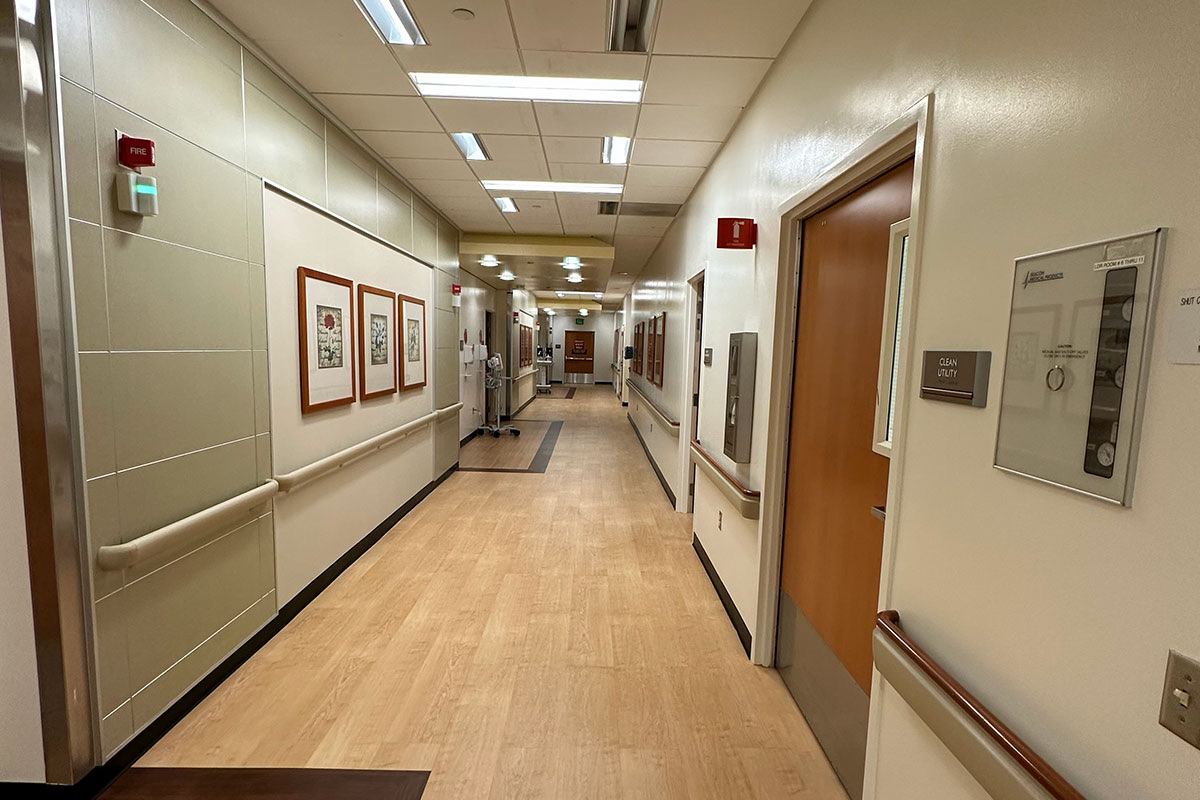
| High | CCU, emergency room, labor and delivery, specimen laboratories, medical units, newborn nursery, outpatient surgery, pediatrics, pharmacy, PACU, surgical units | Patient care areas: patient care rooms and areas, all acute care units, emergency department, employee health, general pharmacy, medication and clean utility rooms, diagnostic imaging, laboratory |
| Highest | Areas caring for immunocompromised patients, burn unit, cardiac cath lab, central sterile supply, ICUs, negative pressure isolation rooms, oncology, operating rooms | Procedural, invasive, sterile support and highly compromised patient care areas: transplant and intensive care units, oncology, OR theaters, procedural suites, pharmacy compounding, sterile processing clean side, transfusion services, isolation units, invasive imaging |
The practical effect: the old Medium group was mostly clinical departments, and ICRA 2.0 empties it of patient care. Under ICRA 2.0, patient care rooms and areas are High, diagnostic imaging is High, and procedural suites are Highest. A diagnostic imaging renovation that the legacy form placed in Medium now sits in High, and a Type C scope there moves from Class III to Class IV. If your facility's form still lists radiology or physical therapy under Medium, that is the legacy matrix.
4. Three new rules can raise the class
- Multi-shift work is Type C. Both matrices list it there, but ICRA 2.0 makes Type B explicitly "small-scale, short duration", so a Type B job that runs past one shift should be reclassified.
- Environmental hazards. Sewage, mold, asbestos, gray water or black water require Class IV for Low and Medium risk groups and Class V for High and Highest. The legacy matrix had no equivalent rule.
- Class III that cannot be sealed. Type C in Medium risk and Type D in Low risk are Class III, but take on the Class IV negative air exhaust requirements when the work area cannot be sealed and completely isolated from occupied patient care space.
5. The precautions themselves got specific
| Legacy matrix | ICRA 2.0 | |
|---|---|---|
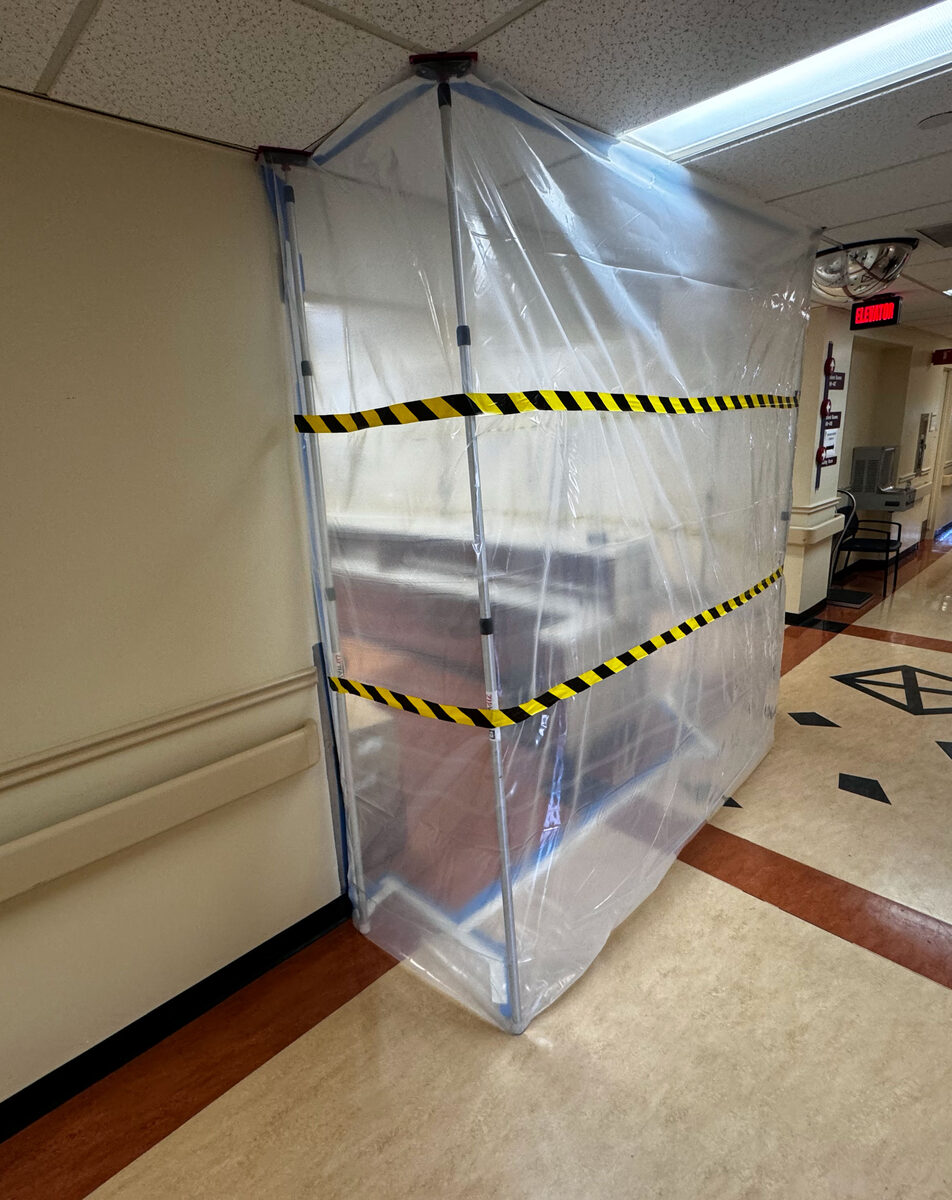
| Barriers | "Complete all critical barriers" (sheetrock, plywood, plastic) or the control cube method, at Class III and IV | Class IV and V: critical barriers meeting NFPA 241, to the ceiling or to the deck where tile is removed, with fire-rated penetrations |
| Negative pressure | Maintain negative air with HEPA-equipped units, at Class III and IV | Class III: neutral to negative if contained. Class IV and V: entire area negative, HEPA exhaust outdoors (unfiltered allowed 25 ft or more from openings), indoor exhaust HEPA-verified at 99.97%, never into shared systems |
| Monitoring | Not specified | A device outside the containment that continuously monitors negative pressure, visual indicator recommended |
| Anteroom | Class IV | Class V |
| Worker clothing | Class IV: HEPA vacuum in the anteroom, or coveralls removed on each exit | Class IV: free of visible dust on exit. Class V: disposable coveralls at all times, removed before leaving the anteroom |
| Permit | Infection control approval when Class III or IV is indicated | Permit and approval for Class III (Type C) and all Class IV and V |
| Closeout | Barriers stay until the project is inspected by Safety and Infection Prevention and cleaned | Inspection by an infection preventionist or designee and an engineering representative before Class III (Type C), IV or V precautions are discontinued or downgraded; negative air keeps running after dust-producing work ends |
What this changes on site
For a contractor, the class is a scope item. Each step up adds material, labor, space and lead time, and it is far cheaper to know which class applies before the bid than after the permit is issued.
- Work that moves from IV to V needs room for an anteroom big enough to stage equipment and clean carts, plus disposable coveralls for everyone, every entry. In a corridor that has to stay open, finding that footprint is usually the hardest part of the containment plan.
- Work that moves from II to III needs an infection control permit if it is Type C, and a containment plan where there used to be dust-control habits.
- Exhaust becomes a design question. Where HEPA exhaust can discharge, how far it is from intakes and windows, and how filtration is verified before work starts all need answers during preconstruction, not on mobilization day.
- Permit lead time. More cells now require a permit and approval, and the facility needs time to issue them.
If your facility still uses the old form
Who decides. The facility's infection preventionist decides which matrix governs and assigns the class. A contractor builds to the permit the facility issues. When the form and the current ASHE guidance disagree, raise it before the permit is issued, and let infection prevention decide which one governs the job.
For a facility team still on the legacy form, noting the ICRA 2.0 class beside the permitted class on each assessment is a simple way to see where the two disagree, and which projects would change if the facility adopted the new matrix.
Check a scope against ICRA 2.0
Our free ICRA 2.0 Level Assessor applies the current matrix, including the multi-shift, environmental and sealing rules above, and returns the class, the permit requirement and a printable checklist for your infection prevention team. To have a contractor walk the containment plan for a specific phase, send us the project.